
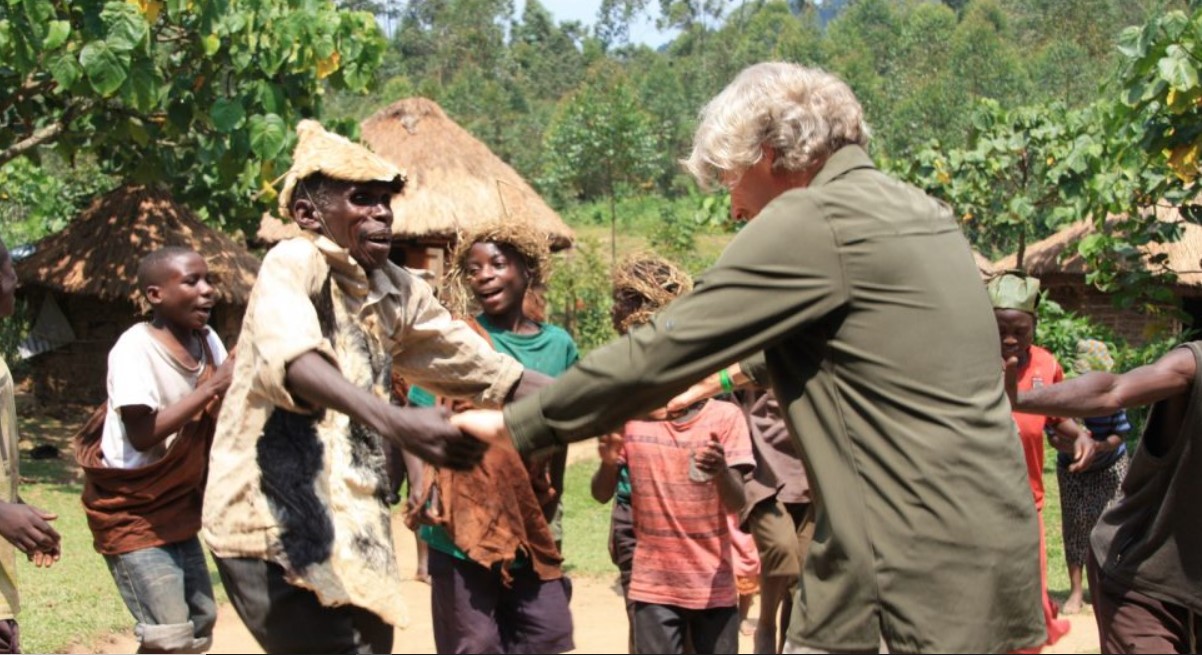
Who Are The Batwa? Facts About Uganda’s First People
If you visit Bwindi or Mgahinga for gorillas, you are walking in the home of the Batwa — the forest’s original guardians.
1. They are the first people of the forest.
The Batwa lived in Bwindi and Mgahinga forests for over 4,000 years before anyone else. They are hunter-gatherers, known as the “Keepers of the Forest.”
2. They are not just “short people.”
The Batwa are often called pygmies, but they prefer Batwa. Adults average about 1.3m – 1.4m tall — an adaptation to living in dense forest for thousands of years.
3. They were moved out of the forest in 1991.
When Bwindi and Mgahinga became National Parks to protect the mountain gorillas, the Batwa were resettled outside the forest. They received no land title. It was a very difficult change for them.
4. Today, there are about 6,700 Batwa in Uganda.
Most live in small settlements around Bwindi, Mgahinga, and Bundibugyo. In total, there are about 80,000 Batwa across Uganda, Rwanda, DRC and Burundi.
5. They have incredible forest knowledge.
A Batwa elder can find 200+ types of medicinal plants, make fire without matches, collect wild honey from high trees, and track animals just by listening. They lived in perfect balance with gorillas.
6. Their language is at risk.
They speak Rukiga and Rufumbira now, but their original language is almost lost. Elders are working hard to teach children old songs and stories.
7. The Batwa Trail is a MUST for your clients.
This is NOT a normal village dance. It’s a 3-4 hour forest walk where Batwa elders show you how they used to live:
– How they hunted with bow and arrow
– How they made fire
– How they built grass huts
– Their traditional songs and spiritual dance
It happens in Mgahinga Gorilla National Park and in Buhoma, Bwindi.
8. Tourism is helping them survive, when done right.
Part of the fee from the Batwa Experience goes directly to the Batwa community for schools, health care and land. This is ethical tourism.
We visit the Batwa with respect. We don’t take photos without asking, we don’t call them “primitive.” We go to listen and learn from the true keepers of the forest.